
Frances Pantaleo, Esq. of Bleakley Platt & Schmidt, Named 2020 Lawyer of the Year
White Plains, NY – Bleakley Platt & Schmidt, LLP, Westchester County’s preeminent law firm, is pleased to announce that partner Frances Pantaleo, Esq. received several accolades in 2019, for her work in her practice area of elder law. She has been named as White Plains’ 2020 Lawyer of the Year in her field by Best Lawyers, regarded nationally as the most credible measure of legal integrity for more than three decades, and will be listed in the 26th Edition of The Best Lawyers in America.
Additionally, the Thomson Reuters publication Super Lawyers Magazine has once again recognized Ms. Pantaleo as one of the top 50 Women Lawyers in the Metro Area and once again as one of the Top 25: 2019 Westchester County Super Lawyers.
As partner, Pantaleo draws on her expertise in elder law, special needs planning, and guardianship proceedings to further the firm’s 80-year legacy of providing superior legal counsel to Westchester residents and businesses. A member of the National Academy of Elder Law Attorneys (NAELA), she heads the firm’s Elder Law and Special Needs Practice Group, a team dedicated to helping elderly individuals and their families handle the legalities of long-term care, estate planning (including preparation of wills, trusts and advance directives), asset preservation, Medicaid applications, guardianship, and other concerns that come with aging and disability.
Ms. Pantaleo is a graduate of New York University School of Law, and has taught elder law at the Benjamin N. Cardozo School of Law in New York City and Pace Law School.
Pantaleo has served as Chair of the New York State Bar Association’s Elder Law and Special Needs Section and is currently Co-Chair of the Committee on the Elderly and Disabled of its Trusts and Estates Section.
This breadth of knowledge and passion for her practice areas has earned Pantaleo numerous honors. Earlier this year, Pantaleo was presented with an award from the New York State Bar Association’s Elder Law & Special Needs Section for her work “in furtherance of the rights of the elderly and persons with disabilities.”
Read MoreJoin Us – NYS Employment Law Updates
Human Resources Network at Dutchess Community College
Join us for a review of the changes to New York State Employment law over the last year. See topics covered below.
- GENDA – the Gender Expression Non-Discrimination Act
- Discrimination based on Reproductive Health Decision
- Equal Pay / Salary History Ban
- Workplace Harassment Protections
- New York State Paid Family Leave Act
When: Thursday, December 12, 2019
Time: 9 am – 10:30 am
Where: The Council of Industry Office, Newburgh, NY
Free for Council of Industry Members
To register, click here to send an email to Alison Butler
Partner Joe DeGiuseppe Speaking at 91st Annual NYSAC Fall Conference
Bleakley Platt partner Joe DeGiuseppe, chair of the firm’s Employment and Immigration Law practices, will speak on Monday, September 16th at the 91st Annual Fall Conference of the NYS Cemetery Association on the topic of “Recent Developments in NYS Paid Family Leave Laws.” Mr. DeGiuseppe’s presentation will provide an overview of various leave issues under this NYS law and its interaction with similar federal, state and local employee leave laws, including FMLA, the NYS Human Rights Law and the NYC and Westchester County Earned Sick Leave Laws.
Mr. DeGiuseppe advises clients on all aspects of labor and employment law, including employment terminations and discipline, reductions-in-force, personnel policies and practices, employee benefit cases and collective bargaining negotiations. He has acted as lead counsel on significant employment discrimination law cases, wage and hour cases and collective actions, non-competition cases and arbitration proceedings. He also advises corporations, business executives, professional employees and individual clients with respect to immigrant visa (green cards) applications, U.S. citizenship applications, nonimmigrant work visa petitions, and employment verification and discrimination issues.
More information on the 91st Annual NYSAC Fall Conference can be found at the following link: http://nysac.com/upcoming-events/
Read More
Courts Can Now Use Google Maps: N.Y. Law Amended to Allow Courts to Take Judicial Notice of Information from Web-mapping Services

I often use Google Maps, the Westchester County Geographic Information Systems, and other web-based mapping services in my cases to find visual information about specific locations around the world that are relevant. Using those maps during depositions is easy. But getting those maps admitted into evidence at a trial or hearing would require an evidentiary certification from the custodian of the image that could be difficult and time consuming. Not anymore.
The New York State Legislature recently amended § 4511 of the Civil Law and Practice Rules (“C.P.L.R.”) to require courts to take “judicial notice” of digital mapping images and related information. Courts can take judicial notice of a fact when it is a well-known or indisputable, proven fact.
The new § 4511(c) reads:
“Every court shall take judicial notice of an image, map, location, distance, calculation, or other information taken from a web mapping service, a global satellite imaging site, or an internet mapping tool, when requested by a party to the action, subject to a rebuttable presumption that such image, map, location, distance, calculation, or other information fairly and accurately depicts the evidence presented. The presumption established by this subdivision shall be rebutted by credible and reliable evidence that the image, map, location, distance, calculation, or other information taken from a web mapping service, a global satellite imaging site, or an internet mapping tool does not fairly and accurately portray that which it is being offered to prove. A party intending to offer such image or information at a trial or hearing shall, at least thirty days before the trial or hearing, give notice of such intent, providing a copy or specifying the internet address at which such image or information may be inspected. No later than ten days before the trial or hearing, a party upon whom such notice is served may object to the request for judicial notice of such image or information, stating the grounds for the objection. Unless objection is made pursuant to this subdivision, or is made at trial based upon evidence which could not have been discovered by the exercise of due diligence prior to the time for objection otherwise required by this subdivision, the court shall take judicial notice of such image or information.”
So, § 4511(c) creates a rebuttable presumption. Any party can ask a court to take judicial notice of the web mapping service images or information. No evidentiary showing is required, but requesting parties must notify their adversaries at least thirty (30) days before a trial or hearing. The adversary must then object no later than ten days before the trial or hearing, stating the grounds for the objection, which must include “credible and reliable evidence” that the image or information “does not fairly and accurately portray that which it is being offered to prove.” If the adversary fails to make a timely objection (unless new facts are learned after the objection deadline), the court must take judicial notice of the image or information.
This is a very practical amendment to the C.P.L.R. that will promote efficiency by saving time. We all rely on these web mapping services in our everyday lives. There is no reason that the courts should be any different.
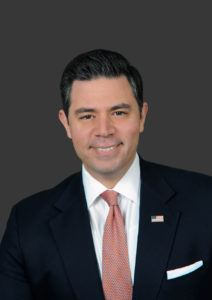 At Bleakley Platt, Mr. Rodriguez focuses his practice in the areas of litigation, intellectual property and real estate. Previously, he was the Director of Real Estate for Westchester County, where he negotiated commercial real estate transactions valued at over $100 million. Prior to his appointment as Director of Real Estate, Mr. Rodriguez defended the County of Westchester in one of the highest-profile HUD enforcement actions in United States history. He has also served as a law clerk to two federal judges and worked as an intellectual property litigator at a large law firm in New York City.
Visit Mr. Rodriguez’s Facebook page “Trademark Tales,” Twitter feed, Instagram feed and LinkedIn for more thoughts on the law.
To read Mr. Rodriguez’s complete biography, click here.
Read MoreSupreme Court Strengthens Rights of Trademark Licensees: Holds that bankruptcy debtors cannot terminate trademark license agreements under section 365 of the U.S. Bankruptcy Code
 In the United States, the Bankruptcy Code allows individuals and entities (“debtor”) who cannot repay their debts to seek relief from some or all of those debts.
One of the peculiar aspects of the Bankruptcy Code is that 11 U.S.C. § 365(a) enables a debtor to reject “executory contracts,” which are contracts that neither party has finished performing. Examples of executory contracts are a real estate lease and an intellectual property licensing agreement.
The question before the Supreme Court in Mission Product Holdings, Inc. v. Tempnology, LLC., was whether the “rejection” of a trademark licensing agreement under § 365(a) also terminated the rights of the licensee to use the trademark.
The Court agreed to hear the case to resolve a split among the circuit courts. The Court of Appeals for the First Circuit held in In re Tempnology, LLC, 879 F. 3d 389 (2018) that a debtor’s rejection of trademark licensing agreement terminated the licensing agreement. The Seventh Circuit, however, had ruled the other way in Sunbeam Products, Inc. v. Chicago Am. Mfg., LLC, 686 F. 3d 372 (7th Cir. 2012).
The Supreme Court agreed with the Seventh Circuit, holding that a debtor’s rejection of trademark license under Section 365 of the Bankruptcy Code has the same effect as a breach of that license agreement outside bankruptcy. Rejection does not rescind rights that the contract previously granted.
“A rejection breaches a contract but does not rescind it. And that means all the rights that would ordinarily survive a contract breach, including those conveyed here, remain in place.” The debtor “can stop performing its remaining obligations under the agreement. But the debtor cannot rescind the license already conveyed. So the licensee can continue to do whatever the license authorizes.”
The Court’s holding is a victory for trademark licensees. It strengthens the rights of licensees by making clear that rejection of a trademark license during bankruptcy does not rescind the license. It will also give trademark licensees greater power and leverage during the bankruptcy reorganization process.
At Bleakley Platt, Mr. Rodriguez focuses his practice in the areas of litigation, intellectual property and real estate. Previously, he was the Director of Real Estate for Westchester County, where he negotiated commercial real estate transactions valued at over $100 million. Prior to his appointment as Director of Real Estate, Mr. Rodriguez defended the County of Westchester in one of the highest-profile HUD enforcement actions in United States history. He has also served as a law clerk to two federal judges and worked as an intellectual property litigator at a large law firm in New York City.
Visit Mr. Rodriguez’s Facebook page “Trademark Tales,” Twitter feed, Instagram feed and LinkedIn for more thoughts on the law.
To read Mr. Rodriguez’s complete biography, click here.
Read MoreBrendan H. Buschman Presents a CLE Seminar on Supplemental Needs Trusts
Brendan H. Buschman, a member of the firm’s Elder Law and Special Needs Practice Group, will give a CLE seminar on Supplemental Needs Trusts for the Mamaroneck Harrison Larchmont Bar Association in conjunction with Benchmark Title on Friday, June 7, 2019 at Emilio’s Ristorante, Harrison, NY.
The presentation will review such topics as Self-Settled Supplemental Needs Trusts, Third Party and Trigger Supplemental Needs Trusts in Wills and/as Testamentary Substitutes, and ABLE Accounts.
Mr. Buschman has experience in elder law, special needs planning and guardianship proceedings under Article 81 of the Mental Health Hygiene Law and Article 17A of the Surrogate’s Court Procedure Act, drafting and administration of special needs trusts, estate planning, drafting of wills and trusts, and estate administration.
To read Mr. Buschman’s complete biography, click here.
Read MoreBleakley Platt attorneys, William P. Harrington and John W. McGowan, to sue New York State Parole Board over release of Judith Clark
On Monday, May 13th, Bleakley Platt attorneys William P. Harrington and John W. McGowan, in conjunction with co-counsel Mark Blanchard and Dennis Lynch of Blanchard and Wilson, commenced an action in New York State Supreme Court on behalf of clients Arthur G. Keenen Jr. and Michael Paige against the New York State Parole Board (the “Board”) and Commissioners Tana Agostini, Ellen Alexander, and William Smith Jr. based on the Board’s decision to grant parole to and release murderer, Judith Clark, who was convicted for her role in the infamous 1981 Brinks robbery which claimed the lives of three innocent men: Sgt. Edward O’Grady (Nyack Police Department); Officer Waverly “Chipper” Brown (Nyack Police Department); and Brinks Security Officer Peter Paige. Arthur Keenen is a retired Nyack Police Officer who was injured during the Brinks robbery and Michael Paige is the son of the late Peter Paige, slain during the robbery.
Through this action, our clients/plaintiffs contend that the Board acted improperly and failed to follow the statutory and regulatory guidelines in making its decision to grant parole to the convicted murderer Judith Clark. Ultimately, our clients seek a reversal of the Board’s decision and that Judith Clark be remanded back to state prison to serve the remainder of her sentence.
This matter garnered media coverage from many local outlets, including News12, the Journal News, Fios1 News, the New York Post, and 1010 WINS among others.
A link to an article covering the press conference and announcement of the suit: https://www.lohud.com/story/news/local/rockland/2019/05/13/brinks-victims-seek-new-parole-hearing-freed-judith-clark/1186735001/
Read MorePartner Jim Glatthaar & Counsel Adam Rodriguez Quoted by The Verge on Facebook Housing Discrimination Case
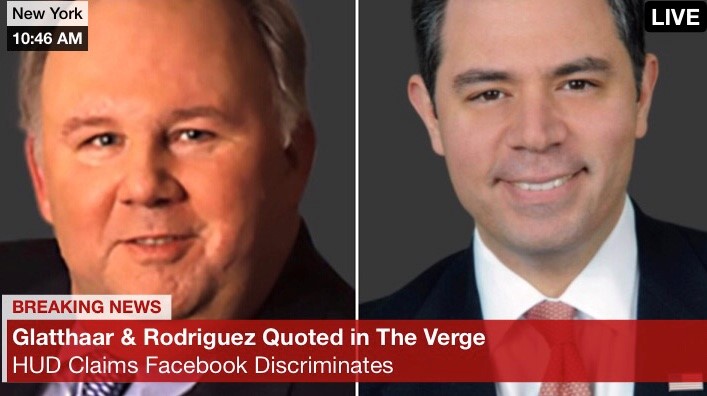 Bleakley Platt Partner Jim Glatthaar and Counsel Adam Rodriguez were key sources for a recent article in The Verge that examines the U.S. Department of Housing and Urban Development’s claim that Facebook violated the Fair Housing Act by letting ad buyers use Facebook algorithms to target audiences that included or excluded certain races, religions, or genders.
According to Mr. Glatthaar, the case is unusual for a variety of reasons. “Something like this is a national practice, whereas most housing discrimination is fairly local,” he says. “The federal government is one of the few entities that can handle something of this scope.”
According to Mr. Rodriguez, HUD doesn’t have to establish that these targeting algorithms are purposefully designed to avoid showing ads to certain protected classes. It just has to demonstrate that the system effectively makes housing less accessible to these people — a concept known as disparate impact. “If there is an algorithm that just happens to discriminate against racial minorities or gender minorities or whatever, I think it would still be problematic,” says Rodriguez. He compares the move to a zoning restriction whose text and intent is race-neutral but that directly results in fewer black residents, which would likely still be considered discriminatory.
To read the entire article, click here.
Mr. Glatthaar is a member of the Litigation, Co-Operative and Condominium, Construction and Real Estate Practice Groups at Bleakley Platt. He has represented landlords, tenants, developers, non-profit institutions, sellers, purchasers, realtors, cooperatives and condominiums in building, zoning, housing and disability-based discrimination claims, landlord-tenant and construction defect claims both in courts and before state and federal administrative agencies. He has also represented property owners and purchasers in complex real estate and financing transactions.
Click here to view his complete attorney profile.
At Bleakley Platt, Mr. Rodriguez focuses his practice in the areas of litigation, intellectual property and real estate. Previously, he was the Director of Real Estate for Westchester County, where he negotiated commercial real estate transactions valued at over $100 million. Prior to his appointment as Director of Real Estate, Mr. Rodriguez defended the County of Westchester in one of the highest-profile HUD enforcement actions in United States history. He has also served as a law clerk to two federal judges, and worked as an intellectual property litigator at a large law firm in New York City.
To read Mr. Rodriguez’s attorney profile, click here.
Read MoreAttorneys for child abuse victim call for Court appointed Special Master to ensure records are protected

Attorneys for child abuse victim call for Court appointed Special Master to ensure records are protected.
New York’s new landmark child abuse act creates a long waiting period before victims can file.
This waiting period must not become an opportunity for new abuse.
Only a Court appointed neutral Special Master can protect the new rights granted to those who have waited decades for their day in Court.
Today, on behalf of our client, and at least one thousand young boys of first- and second-generation American families victimized and abused by Dr. Reginald Archibald of Rockefeller University Hospital, we have filed an action asking the Court to appoint a Special Master to ensure that the newly granted litigation rights of childhood sexual abuse victims are protected.
This neutral Special Master must direct that all records, photos, X-Rays, mail correspondence, and email, if any exists, be preserved. Further, the Special Master must also direct that the Hospital, its officers and employees, and its law firm cease contacting former patients of Dr. Archibald, and that any notes, transcriptions, letters, questionnaires or other materials gathered on behalf of the Hospital be preserved and made available to any patient who is preparing possible litigation under the new statute. In the case of the Victim we represent, these same orders should apply to Madison Square Boys Club, and any other organizations that may have been involved in the actions of Dr. Archibald.
John Corcoran, a retired NYPD Special Assignment Sergeant, was swept into Archibald’s abuse after a swim at Madison Boys Club. With a fake diagnosis, the prestige of Rockefeller University Hospital and the assistance of Madison Boys Club and others, the pre-adolescent Corcoran was exposed to Archibald’s sexual abuse, which Rockefeller University has admitted was “reprehensible.”
“The legislature may have had a very good reason for to delay the implementation of this law by 6 months after passage, but that time period must not become an opportunity to re-victimize our client,” said Barbara Hart of Lowey Dannenberg.
“We have seen how our client was contacted by the Hospital’s law firm and interviewed without informing him of the possibility that he could sue under the new law or that they were acting on behalf of the Hospital,” added William Harrington, of Bleakley Platt.
The new law grants victims, who were barred from pursuing their abusers by the statute of limitations, an opportunity to file legal cases for a period of one year. That year commences in August 2019, but no provision was made to preserve and protect possible evidence on the 6-month period before the law takes effect.
Today’s action seeks to remedy that for Mr. Corcoran and all other victims that may seek relief.
Read More
First Things First: Addressing Burial and Cemetery Issues
From time to time trust and estate attorneys find it necessary to delve into the laws, regulations and rulings regarding cemetery matters, particularly if there is a dispute among a decedent’s family members regarding the proper disposition of a decedent’s remains or a need to determine the unique rights and responsibilities of various parties having an interest in a cemetery lot.
Click here to read the PDF titled ‘First Things First: Addressing Burial and Cemetery Issues’ by Matthew G. Parisi and Raymond M. Planell
Read MoreNew York Imposes New Conflict of Interest Rules for Co-op/Condo and HOA Boards
In September 2017, New York State amended the New York Business Corporation Law (“BCL”) and the New York Not-For-Profit Corporation Law (“N-PCL”) to require additional disclosure by “interested directors” of Cooperatives, Condominiums or Homeowners Associations, i.e. directors who have a direct or indirect interest in a party to a financial transaction approved by the Board. The new law requires the following:
- Once each year, the Corporation shall provide a copy of BCL Section 713 or N-PCL Section 715, whichever is applicable, to each member of the Board.
- An annual report must be prepared and signed by each member of the Board listing all contracts in which any Director had a financial interest, the purpose of the contract, the amount of the contract, the identity of the recipient of the contract award, the date of the meeting, which Directors were present at the meeting, how each Director voted, the date the contract became valid and the length of the contract.
- If there were no contracts during the year in which a Director had a financial interest, the report must be issued and signed anyway.
- The report must be sent to the shareholders at least annually.
The law does not apply to any other business or not-for-profit corporations. For reasons no one understands, no similar law was adopted for Condominiums created under Article 9B of the New York Real Property Law (“RPL”), which is the law under which most condominiums are created.
There have been strident complaints from real estate housing trade groups that the law was proposed, voted on and signed by the Governor with no hearings and minimal, if any, debate, that the law is poorly drafted and covers transactions in which potential conflicts are fully disclosed and the interested director does not participate in the discussion or vote. Remedial legislation is possible, including making the provisions applicable to Condominiums created under the RPL, but repeal of the disclosure and reporting requirements is not anticipated.
The law takes effect January 1, 2018.
For more information about this advisory or to discuss related matters, please contact James W. Glatthaar, a member of the Litigation, Co-Operative and Condominium, Construction and Real Estate Practice Groups by email jwglatthaar@bpslaw.com or by telephone: 914-287-6159.
Read MoreNew York is First State in the Nation to Propose Cybersecurity Regulations Impacting Banks, Insurance Companies and Mortgage Lenders
The New York State Department of Financial Services has proposed regulations that would impose new cybersecurity requirements on banks, insurance companies, mortgage lenders and others. The proposed regulations, issued pursuant to the Financial Services Law, would apply to entities that require a license or authorization under New York State banking, insurance or financial services laws to operate. New York is the first state in the nation to propose such cybersecurity regulations, which are designed to thwart nation-states, terrorist organizations and independent criminal actors from exploiting technological vulnerabilities to gain access to sensitive electronic data. The proposed regulations would create minimum cybersecurity standards to protect customer information and information technology systems.
These proposed regulations address the following key areas:
- Establishment of a cybersecurity program
- Implementation of a written cybersecurity policy
- Designation of a Chief Information Security Officer
- Implementation of a written third party vendor information security policy
- Notification requirements to the Superintendent of Financial Services
Cybersecurity Program
Each entity that is covered by these regulations would be required to establish and maintain a cybersecurity program designed to ensure the confidentiality, integrity and availability of its information systems. The core functions that the program must perform include identifying nonpublic information stored on information systems, using defensive infrastructure to protect this information, detecting any threats to information systems and recovering and restoring operations after such a threat is detected.
Cybersecurity Policy
The written cybersecurity policy must address protection of information systems and the nonpublic information stored therein. The proposed regulation includes over a dozen areas, such as systems and network security, access controls, risk assessment, and customer data privacy, which, at a minimum, must be included in the policy. In addition, this policy would be required to be reviewed by the company’s board of directors and approved by a senior officer.
Chief Information Security Officer
The proposed regulations would also require the designation of a Chief Information Security Officer, who will oversee and implement the cybersecurity program and enforce the cybersecurity policy. In addition, entities covered by this regulation would be required to employ cybersecurity personnel sufficient to manage cybersecurity risks and to perform core cybersecurity functions.
Third Party Vendor Information Security Policy
The third party vendor information security policy would be required to ensure the security of information systems and nonpublic information that are accessible to or maintained by third party vendors. These policies would be required to address certain key areas, including risk assessments of vendors and due diligence processes used to evaluate vendors, as well as establishing preferred provisions, such as use of encryption, right to audit vendors, and vendors’ use of authentication to access information, to be included in vendor contracts.
Notification Requirements
The proposed regulations would require each entity that is covered to notify the Department of Financial Services within 72 hours of becoming aware of a cybersecurity threat that has a reasonable likelihood of materially affecting operations or that affects nonpublic information. In addition, starting January 15, 2018, the regulations would require the board of directors or a senior officer to submit an annual compliance certification (the regulations provide a template of the certification to be used).
The proposed regulations do contain a limited exception for smaller companies, but would still require these smaller companies to comply with certain requirements. The proposed regulations were subject to public comment until November 14, 2016. If they are finalized in their current form, they would go into effect January 1, 2017. Those affected by the regulations would have until June 30, 2017 to come into compliance. The proposed regulations do not specify penalties for non-compliance. If adopted, it is possible that courts would look to the regulations to define the proper standard of care in this developing legal area.
For more information about the proposed regulations or advice regarding compliance, please contact Zachary Cohen or any of the co-chairs of Bleakley Platt’s Information Technology and Cybersecurity Practice Group: Thomas G. Bailey, Robert Braumuller or Richard F. Markert.
Read MoreU.S. Supreme Court Provides Patentees an Easier Path to Increased Patent Damages
In its recent decision in Halo Electronics, Inc. v. Pulse Electronics, Inc., 579 U.S. ___ (June 13, 2016), the United States Supreme Court made it easier for a prevailing patentee to recover additional damages in a patent infringement action. After Halo, a patentee need only show that the infringer acted in bad faith to request an award up to three times his actual damages. Under prior law, proof of willful infringement alone was not sufficient; the willful infringer offering a reasonable argument of patent invalidity or non-infringement, albeit one developed during litigation, could avoid liability for anything beyond the patentee’s actual compensatory damages.
Key points:
- The Supreme Court replaced the Federal Circuit’s stringent two part test for recovery of increased damages with a more relaxed standard focusing on the bad faith of the infringer.
- The Supreme Court also lowered the patentee’s burden of proof and made the trial court’s damage award more difficult to overturn on appeal.
- If the patentee proves an infringer’s conduct was egregious, the trial court can increase the patentee’s damages. The court can award up to three times the patentee’s actual damages (lost profits or a reasonable royalty).
- An “egregious” infringer is one that acted willfully and in bad faith.
- The patentee need only prove the infringer’s subjective bad faith by the lower preponderance of the evidence standard.
- Objective arguments about patent invalidity and non-infringement will no longer allow the willful infringer to block an award of additional damages
- The trial court has broad discretion as to when to increase the damage award, and the amount to award, against the egregious infringer.
- The trial court’s decision on damages will only be reversed on appeal if the court abused its discretion, making it more difficult to vacate the award than under the prior standard of review.
The Law of Willful Infringement
The damage statute before the Court simply states that the court “may increase damages up to three times the amount found or assessed.” 35 U.S.C. § 284. Courts have long limited such “treble damages” awards to cases of willful infringement. However, exactly what is required to demonstrate willful infringement has varied over the years. At one point to avoid a willfulness finding, an infringer with notice of the patent needed counsel’s opinion of patent invalidity or non-infringement before beginning infringing activity. Congress definitively eliminated the need for an opinion of counsel in the recent patent reform statute, the America Invents Act,P.L.112-29. See 35 U.S.C. § 298.
The Heavy Burden Needed to Recover Additional Damages Under Prior Case Law
Several years ago, the special patent appeals court, the Federal Circuit, adopted a rule in In re Seagate Technology, LLC, 497 F.3d 1360 (Fed. Cir. 2007), requiring the patentee to establish that the infringer’s conduct was both objectively and subjectively reckless to recover additional damages.[1] The infringer would not be found “objectively reckless” if he presented a reasonable argument of patent invalidity or non-infringement, even though the infringer was unaware of that argument before the litigation. Evidence of the infringer’s state of mind was excluded unless the patentee met its burden on the objective prong. Moreover, until the patentee proved both the infringer’s objective and subjective recklessness by clear and convincing evidence, the Court could not consider increasing the damage award.
The Supreme Court Finds That Attorney Ingenuity Should Not Relieve The Willful Infringer
In a unanimous opinion, the Supreme Court in Halo rejected the stringent Seagate rule as contrary to the broad language of the damage statute. Instead, the Supreme Court left to the trial court’s discretion when to increase damages, as well as the amount to award. The infringer’s subjective bad faith alone may be the basis for additional damages, and objective arguments about patent validity and infringement will not protect the willful infringer. Although there is no rule or formula, the Court held such damages are reserved for “egregious cases of willful infringement,” conduct that is “willful, wanton, malicious, bad-faith, deliberate, consciously wrongful, flagrant, or – indeed - characteristic of a pirate.” As the Court explained, “someone who plunders a patent” should not “escape… any comeuppance under Section 284 solely on the strength of his attorney’s ingenuity.” The trial court’s determination will only be reversed for abuse of discretion.
The Concurring Justices’ Concern
The concurring Justices expressed concern that the looser standard would give some companies more leverage to extort money from innocent businesses. The Justices stressed that additional damages should only be awarded in cases of egregious misconduct.
Future Litigation Will Focus on the Infringer’s State of Mind
As the concurrence noted, patentees now have greater leverage against the deliberate infringer acting in bad faith. Applying the prior standard, a defendant could knock out an enhanced damages claim by an early motion showing a “substantial” question about the patent’s invalidity or the defendant’s non-infringement. After Halo, the focus is instead on the infringer’s state of mind, raising factual issues that generally cannot be determined until trial. This puts more pressure on a defendant to settle.
The opinion gives litigants and courts little guidance beyond that there must “generally” be “egregious misconduct”; future case law will have to develop the factors warranting a particular award. The Halo decision makes clear, however, that a bad faith infringer may not “escape” increased damages because his litigation counsel devised a reasonable argument of patent invalidity or non-infringement during litigation.
For more information about this advisory or to discuss other patent litigation issues, please contact Janet Linn at (914) 287-6145 or jlinn@bpslaw.com.
[1] The patentee needed to prove that “the infringer acted despite an objectively high likelihood that its actions constituted infringement of a valid patent” and the objectively defined risk “was either known or so obvious that it should have been known to the accused infringer.” 497 F.3d at 1371. Read MoreIndependent Contractor Misclassification (2015)
An Overview of Relevant Legal Issues and Recent Developments
Click here to view the PDF titled ‘Independent Contractor Misclassification’ (2015) by Joseph DeGiuseppe, Jr.
Read MoreThe Subrogation Rights of Medicare Advantage Organizations Should be Considered When Settling a Personal Injury Action
A recent case decided by a U.S. District Court in Florida provides an important reminder that Medicare Advantage Organizations may employ Medicare Secondary Payment reimbursement remedies and that the settlement of a personal injury action without considering such an organization’s lien is done at one’s peril. See Humana Medical Plan, Inc. v. Western Heritage Insurance Company, 2015 U.S. Dist. 31875 (S.D. FLA 2015).
“Medicare Advantage Organizations” are private insurance companies that contract with the Center for Medicare and Medicaid Services to provide Medicare benefits and may also provide additional benefits to its enrollees.
The Medicare Secondary Payer Act (“MSP Act”) provides that Medicare is to serve as the “secondary payer” to other sources of insurance coverage including group health plans, workers compensation plans, automobile or liability insurance plans. 42 U.S.C.§1395 y(b)(2)(A). The MSP Act authorizes Medicare to make conditional payments for a patient’s medical treatment and requires a primary plan to reimburse Medicare for all conditional payments (42 U.S.C. §1395 y(b)(2)(B)).
The MSP Act further provides that, in the event the primary plan fails to reimburse such conditional Medicare payments, the United States is authorized to bring an action against the primary plan for double the amount due.
In Humana, a plaintiff in a personal injury action had enrolled in a Humana Medicare Advantage Plan and settled her claim against the condominium complex where she had slipped and fallen, for $115,000. While Medicare had not made any “conditional payments” on plaintiff’s behalf, the Humana Medicare Advantage Plan had paid approximately $19,000 for the plaintiff’s medical treatment. When the insurance carrier for the defendant condominium learned of Humana’s lien rights it attempted to include Humana on the settlement check but the state court directed that the full $115,000 settlement should be paid to the plaintiff.
Thereafter, Humana pursued the defendant’s insurance carrier, Western Heritage Insurance Company in the U.S. District Court to recover the funds that it paid on the injured party’s behalf.
Humana alleged that it had the same rights as Medicare and that its payments were conditioned upon reimbursement and, thereafter, subject to MSP Act’s statutory private cause of action and entitled to recover double damages.
Relying on the Third Circuit Court of Appeals decision In Re Avandia, 685 F.3d 353 (3rd Cir. 2012), the District Court determined that a Medicare Advantage Organization such as Humana is entitled to assert MSP Act’s private cause of action to pursue recovery of payments made for medical expenses and it was statutorily entitled to recover double the amount it had paid on behalf of the injured party.
New York practitioners should note that the Appellate Division, Second Department, in Trezza v. Trezza, 104 A.D.3d 37, 957 N.Y.S.2d 380 (2d Dept. 2012), has held that New York’s General Obligation Law §5-335, (which protects a plaintiff who settles an action for personal injuries from being subject to a reimbursement claim) as applied to Medicare Advantage Organizations, is preempted by federal law. The Trezza holding thus exposes insurance carriers for settling defendants in New York personal injury actions to the same risk as the defendant’s insurance carrier in Humana.
For more information about this Client Advisory, please contact: Vincent W. Crowe, a member of the Insurance and Litigation Practice Groups.
Read MoreCan a Shareholder Withhold a Portion of the Maintenance Fee When an Amenity is Not Available?
First, the shareholder should carefully review the terms of his proprietary lease, which will generally establish the conditions under which a shareholder may withhold payment from the cooperative. Most proprietary leases contain language providing that “the Lessee (shareholder) will pay maintenance to the Lessor” (cooperative) upon the terms established by the cooperative “without any deduction on account of any set-off or claim which the Lessee may have against the Lessor.” Language similar to the foregoing will enable the cooperative to threaten dire consequences, such as declaring the shareholder in default, if the shareholder resorts to self-help by withholding or escrowing a portion of the maintenance. A threat of default may subject the shareholder to late fees, interest, legal fees and possibly revocation of his proprietary lease if he does not promptly “cure the default” by paying all of the money withheld. The shareholder should further be advised that, assuming the apartment is subject to financing, a default under the proprietary lease would also constitute a default under their financial agreement with the lender. So a shareholder should pursue all other options before withholding a portion of the monthly maintenance.
Second, except as provided below, it appears that depositing the maintenance in a rent escrow may not be an option for the shareholder. Real Property Actions and Proceedings Law Section 770, which applies in New York City, Westchester, Rockland, Nassau and Suffolk counties, allows a tenant to deposit money into a “rent escrow” account where there is a “loss of essential services.” However, a loss of essential services is defined as loss of “heat, water, light, electricity or adequate sewage disposal facilities, or an infestation of rodents.” The loss of a swimming pool, which would be appropriately characterized as an amenity, would not qualify as a loss of essential services.
Third, the shareholder should carefully review the cooperative by-laws, which may allow the shareholders to remove directors with or without cause. The threshold to remove directors “without cause” is more difficult. However, the failure to close out old permits resulting in expensive upgrades which would have been unnecessary if the permits had been timely closed out and a season-long pool shut down could arguably be wasting corporate assets and grounds for removal for cause. Should the shareholder wish to proceed in this fashion, the procedures for calling a special meeting of shareholders to remove the directors “for cause” will be spelled out in the by-laws. Generally, cooperative by-laws will require a petition demanding a special meeting of shareholders, signed by 25% of the outstanding shares in the cooperative and specifying the reason for the meeting (to remove directors for cause) and the grounds for removal, be presented to the Secretary of the cooperative. If the requirements are met, the Secretary must call the special meeting of shareholders. If the requirements are not met, the Secretary may deny the petition. Those shareholders who called the meeting have the burden of convincing the shareholders that the directors violated their fiduciary duty to the shareholders and must be removed from office.
Fourth, shareholders could bring a lawsuit against the directors, in their official capacity and individually, for breach of fiduciary duty, corporate waste and whatever other claims the shareholders have against the directors. This will require substantial investment in an attorney familiar with corporate matters and litigation to prosecute the lawsuit. Such lawsuits are expensive to bring and are time consuming so there may not be any immediate benefit for those who invest their money into the lawsuit. The lawsuit may encourage the Board to get the repairs completed promptly so they can request that the lawsuit be dismissed or settled in some way.
Last, the shareholder could, either in a stand-alone lawsuit or part of another lawsuit, commence a shareholder derivative action in the name of the corporation and against the directors alleging corporate waste and breach of fiduciary duty. New York’s Business Corporation Law requires at least 5% of the corporation’s outstanding and issued shares be plaintiffs in order to commence and maintain the action. As part of the derivative action the shareholders could seek a court order allowing them to withhold a portion of their maintenance until the lawsuit is dismissed or otherwise resolved. Armed with such a court order, the shareholder could push the Board to settle the case and get the pool repaired and open.
A final word about lawsuits. The shareholder should know that by suing the cooperative he is suing himself and his neighbors. The Board may attempt to vilify the shareholders for forcing the cooperative to spend money defending itself, money which could go into repairing the pool. A particularly vindictive Board might impose a “litigation assessment” so everyone knows a few shareholders are costing everyone money. If the shareholders wish to proceed with a lawsuit, they should be prepared for both pushback from neighbors and vilification from the Board.
For more information about this Client Advisory and related issues, please contact: James Glatthaar, a member of the Litigation, Construction and Real Estate Practice Groups.
Read MoreFederal Government Expected to Increase Immigration Compliance Audits and Fines in 2015
All employers should be aware that the federal government is likely to devote increased resources to auditing employer compliance with immigrant employment laws in 2015. Those laws apply to large and small employers alike, and can often result in substantial fines for the unwary. All companies should take steps to familiarize themselves with these requirements and consider an independent audit to ensure that they aren’t taken by surprise, at potentially significant cost to the company, when federal auditors come calling.
The U.S. Immigration and Customs Enforcement (ICE), which is a part of the Department of Homeland Security (DHS), is authorized to conduct audits of an employer’s I-9 Employment Verification Forms (I-9 Forms) to ensure that the employer is complying with U.S. immigration laws in its hiring and employment verification practices. During its inspection of I-9 Forms, the ICE Auditor will review the Forms for suspect documents, and document discrepancies, untimely employment verifications, and technical paperwork violations. Based on the findings of the investigation, one or more of the following Notices will be issued: Notice of Inspection Results (the “Compliance Letter”); Notice of Suspect Documents; Notice of Discrepancies; Notice of Technical or Procedural Failures; a Warning Notice; and/or a Notice of Intent to Fine.
The recommended fines that can be imposed by ICE on an employer can be substantial. Those fines are determined under a range of fines for first, second and third offenses, and may be either enhanced or mitigated based on such factors as the employer’s business size, the employer’s “good faith,” the seriousness of the offenses, whether or not unauthorized workers had been employed, the employer’s history of prior offenses, and a “cumulative adjustment” based on so-called aggravating, mitigating or other factors involved in a particular case. Fines for simple errors, such as incomplete or incorrectly completed forms, range from $110 to $1,100 per violation. Fines increase to $375 to $14,050 per violation for “knowingly hiring or continuing to employ” unauthorized workers.
During the five year period from 2007 to 2012, ICE Audits of employer I-9 Forms increased from 250 to more than 3,000, an 1100% increase. In 2012, ICE issued more than $13 million in fines based on violations discovered during these Audits. More recently, a fine of over $228,000 was affirmed by an Administrative Law Judge against a Georgia construction company for (1) failing to ensure that 277 employees properly completed section 1 of Form I-9 and/or failing itself to properly complete section 2 of the Form; and (2) failing to prepare and/or present I-9 Forms for another 87 employees.
As part of its 2015 fiscal year Annual Performance Plan, the Office of Inspector General (OIG) will review the employer selection process utilized by ICE for I-9 Audits and will look at “whether ICE has effective policies and practices to identify and select businesses for I-9 inspections and re-inspections.” As a result of these anticipated policy changes, employers can expect the number of I-9 Audits and fines assessed by ICE to continue trending upwards in 2015.
The Firm’s Immigration Law Practice Group is experienced in counseling employers on I-9 employment verification and work authorization issues, including government I-9 Audits.
For more information on this Client Advisory, please contact:
Joseph DeGiuseppe, Jr., Chair, Labor and Employment and Immigration Practice Groups
Read MoreIssues in Special Needs Planning
A Plan for Special Needs
As a parent of a child living with a disability – whether it is a physical disability, intellectual disability, developmental disability, autism or mental illness – you are well aware of your loved one’s extraordinary requirements. In his or her life to date, almost everything has needed more time, more attention and more care than you might reasonably have anticipated. It is no wonder, then, that you might not have completed planning for the next stages in your child’s life – when you are not able to oversee your child’s care.
Click here to view the PDF titled ‘Issues in Special Needs Planning’ by Frances M. Pantaleo
Read MoreSix Years After Hall Street: The Continued Viability of Manifest Disregard, Jurisdiction by Jurisdiction
The Federal Arbitration Act (“FAA”) generally requires that state and federal courts enforce or “confirm” arbitration awards.
Click here to view the PDF titled ‘Six Years After Hall Street: The Continued Viability of Manifest Disregard, Jurisdiction by Jurisdiction’ by John S. Diaconis
Read MoreImmigration Compliance Issues (2015)
An Overview of Relevant Issues and Recent Developments
Click here to view the PDF title ‘Immigration Compliance Issues’ (2015) by Joseph DeGiuseppe, Jr.
Read MoreNew York State Wage Theft Prevention Act
Effective April 9, 2011, the New York Wage Theft Prevention Act (“WTPA”) will amend Section 195 of the New York State Labor Law (“Labor Law”) to require that New York employers provide employees hired on or after this date with a written acknowledgment concerning their rates of pay, wage allowances, pay dates, and related matters. The following is a summary of the WTPA’s wage payment reporting and payroll record retention requirements. Employers need to ensure that they are in full compliance with the new wage and hour notice requirements of the Labor Law in order to avoid the imposition of the expanded civil and/or criminal penalties set forth in Sections 197 and 198, also effective on April 9, 2011.
Click here to view the PDF titled ‘New York State Wage Theft Prevention Act’ by Joseph DeGiuseppe, Jr.
Read More